Understanding the Treatment Options for Slipped Rib Syndrome
Slipped rib syndrome is a condition that can cause pain in the lower chest or upper abdomen. It most often involves the eighth, ninth, or tenth ribs, whose cartilage connects indirectly to the breastbone. Excess movement at these cartilage connections can irritate surrounding nerves and tissues.
The condition is frequently overlooked or attributed to other causes of chest or abdominal pain, which can delay appropriate treatment.
Treatment approaches vary depending on the severity of symptoms and the patient's response to initial interventions. Conservative management is typically the first course of action and may include activity modification, pain relief, physical therapy, and, in selected cases, intercostal nerve blocks.
These methods aim to reduce pain and irritation while improving comfortable movement and musculoskeletal function.
When conservative treatments do not provide adequate relief, surgical intervention may be considered. One established approach is excision of the affected costal cartilage, sometimes called rib tip resection, to address the source of rib movement and nerve irritation.
Accurate diagnosis remains a central challenge in managing slipped rib syndrome. Physical examination and dynamic ultrasound can help support the diagnosis, while other tests may be needed to rule out alternative causes of chest or abdominal pain.
Patients experiencing persistent lower chest or abdominal pain should seek evaluation from a clinician familiar with chest wall conditions to ensure appropriate and timely management.
What Is Slipped Rib Syndrome?
Slipped rib syndrome is a musculoskeletal condition involving excessive movement of cartilage in the lower rib cage. It most commonly affects the eighth through tenth ribs, which attach indirectly to the sternum through shared cartilage.
A clinician can tailor slipped rib syndrome treatment options to the severity of symptoms, the degree of rib instability, and how well initial measures have worked.
Common symptoms include sharp or stabbing pain that may be provoked by specific movements or actions such as coughing, sneezing, twisting, or reaching overhead. Some people also describe a popping, clicking, or slipping sensation during movement.
Diagnosis is generally based on a detailed history and physical examination. Dynamic ultrasound can sometimes show abnormal rib movement during provoking actions, while a local anaesthetic injection may help identify the painful nerve or rib region. The condition is considered underdiagnosed, partly because it is not always recognised as a cause of lower chest or upper abdominal pain.
Signs You Might Have Slipped Rib Syndrome
Slipped rib syndrome can produce several symptoms that may help a clinician identify the condition. A primary symptom is localised pain in the lower chest or upper abdominal region, which may intensify during twisting, bending, deep breathing, coughing, or sneezing.
Some individuals report a popping or clicking sensation during movement. Pain may be sudden and sharp during a triggering movement, then settle into a dull ache. When an intercostal nerve is irritated, discomfort may travel around the side of the body towards the back or upper abdomen.
Palpation of the lower rib margin may reveal tenderness in the affected area. Symptoms may become more noticeable during physical activity or after prolonged sitting, depending on the movements and positions that aggravate the unstable rib.
Because these symptoms overlap with those of several chest and abdominal conditions, clinical evaluation is necessary for an accurate diagnosis. A clinician may use specific examination techniques to reproduce symptoms, but these should not be attempted forcefully at home.
How Doctors Diagnose Slipped Rib Syndrome
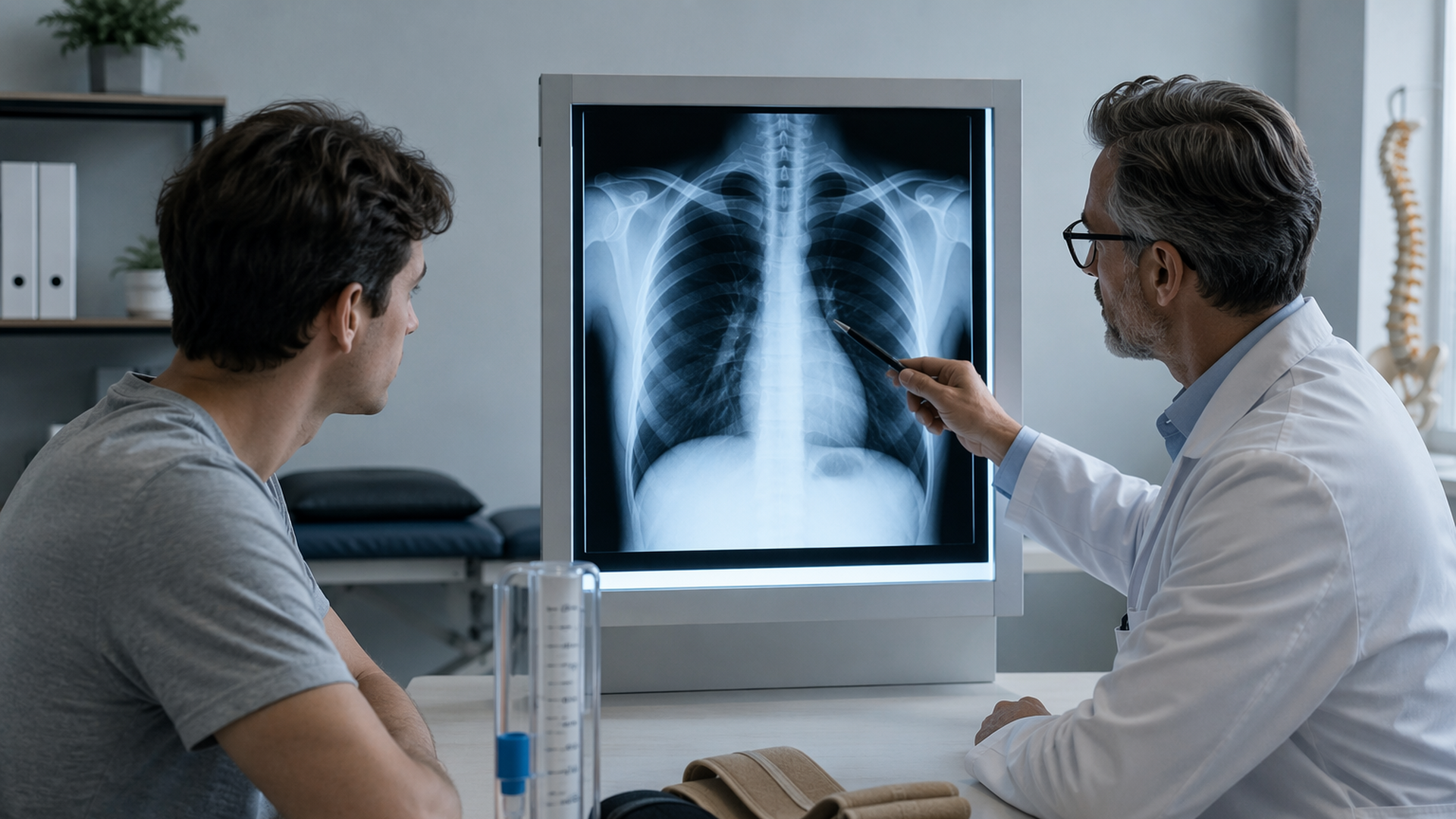
Diagnosing slipped rib syndrome can be challenging because standard imaging tests, including X-rays, CT scans, and MRI scans, may be normal. This is because the problem often relates to movement rather than a fixed structural abnormality.
Physical examination is central to diagnosis. A clinician may apply gentle pressure along the lower rib margin to identify tenderness or reproduce the characteristic pain. The hooking manoeuvre, in which the lower rib margin is carefully lifted forwards, has historically been used, although it can be uncomfortable and is not appropriate for every patient.
Dynamic ultrasound can be useful because it captures rib and cartilage movement in real time during actions such as coughing, twisting, or abdominal tightening. A diagnostic nerve block may also support the diagnosis if local anaesthetic provides substantial temporary relief.
A detailed review of the patient's medical history and symptoms is essential to rule out other possible causes, including cardiac, respiratory, digestive, abdominal wall, and musculoskeletal conditions.
Conservative Treatments for Slipped Rib Syndrome
Conservative treatments are typically the initial approach for managing slipped rib syndrome. They can reduce symptoms without surgery for some people.
Rest and activity modification are commonly recommended, particularly avoiding movements such as heavy lifting, repetitive twisting, or exercises that consistently trigger pain. The aim is not necessarily complete inactivity, but reducing the movements that aggravate the rib area while maintaining comfortable activity.
Pain relief may include ice or heat, depending on which provides better symptom relief. Nonsteroidal anti-inflammatory drugs may be appropriate for some people, but they are not suitable for everyone and should be used according to medical advice.
Physical therapy can help address posture, breathing mechanics, core strength, thoracic mobility, and movement patterns that may increase irritation around the lower rib cage. Treatment should be tailored to symptoms, and forceful manipulation of a painful or unstable rib should be avoided.
When Slipped Rib Syndrome Requires Surgery
Surgery may be considered for persistent, severe symptoms that continue despite appropriate conservative treatment. The decision depends on the impact of pain on daily life, the suspected source of instability, imaging and examination findings, and the patient's overall health.
Surgical approaches may include removal of a portion of the affected costal cartilage or stabilisation techniques designed to reduce abnormal rib movement. The most suitable procedure varies between patients and should be discussed with a surgeon experienced in chest wall and rib disorders.
Many patients report meaningful pain improvement after surgery, but outcomes vary and recurrence can occur. A careful preoperative assessment is important to confirm that the affected rib is the likely source of symptoms and to select the most appropriate treatment.
Persistent or severe chest pain should always be assessed promptly, particularly if it occurs with breathlessness, sweating, nausea, fainting, or pain spreading to the arm, jaw, neck, or back. The British Heart Foundation’s guidance on heart attack symptoms outlines warning signs that require urgent medical attention.
Conclusion
Slipped rib syndrome can be managed through a range of treatment approaches, typically progressing from conservative measures to surgery when necessary. Initial treatment often involves activity modification, symptom relief, and physical therapy to address movement-related pain and functional limitations.
When conservative treatment does not provide adequate relief, surgical options such as costal cartilage excision or stabilisation procedures may be considered. The decision to pursue surgery depends on symptom severity, functional impairment, diagnostic findings, and the individual's response to previous treatment.
Timely diagnosis is important because prolonged, unrecognised slipped rib syndrome can contribute to chronic pain and reduced activity. A thorough evaluation by a qualified medical professional is necessary to confirm the diagnosis and create an individualised treatment plan.
